Lots To Do & See
In & Around Usk
Monmouthshire & The Wye Valley
Things to do in South Wales
Beautiful Countryside, Welsh History in Abundance
Whether you're planning a relaxing escape, an adventure-filled break or a chance to explore the beauty of Wales, South Wales offers something for everyone. From vibrant market towns and historic castles to stunning countryside and coastal scenery, it's the perfect destination.
Ideally located in the heart of Monmouthshire, Glen-yr-Afon provides the perfect base to discover the very best of South Wales. Nestled in the historic market town of Usk, named the Best Place to Live in Wales 2026 by The Sunday Times, guests can enjoy riverside walks, independent boutiques such as The Copper Tree (owned by Tim's wife Claire), local pubs and cafes, and easy access to some of Wales' most loved attractions.
Perfectly positioned between Cardiff and the Brecon Beacons, Glen-yr-Afon is an ideal place to stay for guests attending major sporting events, concerts and festivals across South Wales. The spectacular Wye Valley and Brecon Beacons are within easy reach, offering endless opportunities for walking, cycling, fishing and exploring the great outdoors. Historic castles, beautiful gardens, award winning vineyards and the dramatic Welsh coastline are all just a short drive away - making every stay as relaxing or adventurous as you choose.

Usk Town
The town of Usk is steeped in history, from the ruins of a Norman castle to the seventeenth century buildings that adorn the cobbled streets. It sits on one of the finest salmon fishing rivers in the country, the River Usk. It's 11th century castle is the backdrop for an enchanting, romantic garden.
Usk's charm also lies in the range of its small independent shops, tearooms and pubs, riverside walks and bulging hanging baskets and its well stocked Rural Life Museum and annual agricultural show. Its convenient location, less than 10 miles from the M4, yet feeling a whole world away.
History & Culture
The town of Usk was founded on the site of the Roman fort of Burrium. The community grew in the 12th century around Usk Castle, built and presided over by the de Clare family, who actually planned the township. The castle is in remarkably good condition and although it remains in private ownership, it is still possible to enjoy some of its buildings and grounds.
Despite being raised to the ground by the marauding Owain Glyndwr in the early 15th century, Usk has always been a prosperous little market town thriving on the fertile banks of the River Usk. Today that legacy is well fulfilled with regular farmers markets and agricultural shows providing a showcase for the local produce that is considered by many in culinary circles to be amongst the best in Britain.
Local Castles & Tintern Abbey
South Wales is home to some of the most impressive castles in Britain, ranging from medieval fortresses to Gothic Revival masterpieces, each with unique history and architecture.
Notable Castles -
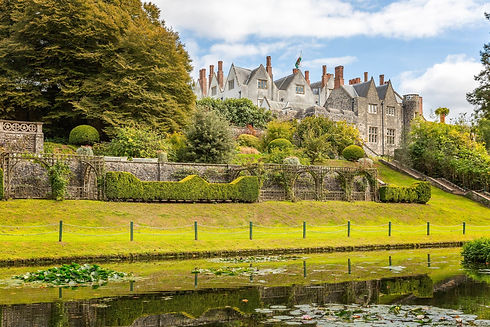
Usk Castle (shown) - Just 10 mins walk from Glen-yr-Afon. This English castle was built by a Frenchman on a previously fortified, possibly Roman, site which has prehistoric connections.
It was the site of the start of the Battle of Usk in 1405 and has been a ruin since 1536.
Tintern Abbey - Tintern Abbey is a national icon — still standing in roofless splendour on the banks of the River Wye nearly 500 years since its tragic fall from grace.


Principality, Cardiff City and Liberty Stadiums
The national stadium for Wales the Principality Stadium, is home to the Wales national rugby team and graces the riverside right in the centre of Cardiff. The iconic sports venue – one of only two in Europe to feature a retractable roof – offers daily stadium tours and hosts many high-profile sports, concerts, conferences and events throughout the year.
If football is your passion, South Wales boasts two premier league football teams in Cardiff City and Swansea City, based at Cardiff City Stadium and Liberty Stadium, respectively. So whether you’re visiting for business or pleasure, with Glen-yr-Afon about a 40minute drive from Cardiff, it’s the perfect place to rest after the buzz of an event or the hustle and bustle of the city.
Big Pit National Coal Museum
Big Pit: National Coal Museum is the most popular attraction within the Blaenavon World Heritage Site. The museum is based around the former Big Pit Colliery, which was sunk in about 1860 and closed in 1980. The site reopened as a museum in 1983 and is now known around the world, especially after winning the Gulbenkian Prize for museum of the year in 2005.
A visit to Big Pit includes a 300ft (90m) descent into the old colliery, where a former coalminer will take you on a fascinating and personal tour with the sights, sounds and smells of the mine creating an impression of what working life was like at the coalface.
Above ground there is an exciting 20 minute audio-visual presentation describing the daily toil of miners and the changing methods of coalmining through time.


Cardiff Bay & City Centre
Cardiff city centre is a destination for serious shoppers. Leading high street stores complement the independent traders and traditional offerings at the striking Victorian glass-roofed Cardiff Market. Make sure you visit the historic Victorian arcades, crammed with coffee shops, vintage paraphernalia and craft shops with a fabulous atmosphere.
Cardiff Bay is a hub of activity offering a myriad of things to do from dawn to dusk. An eclectic mix of culture and architecture with Mermaid Quay leading the way with funky bars, eateries and lively nightlife to the cultural haven of the Norwegian church and café and Cardiff Wetlands Reserve. Take a leisurely stroll around the Bay and take in all the sights. Cardiff Bay Barrage offers spectacular views across Cardiff Bay and the Severn Estuary. Cross the Barrage embankment where there’s a children’s play area, Skate Plaza and adiZone outdoor gym and just a little further along you’ll come across Roald Dahl Plaza, Techniquest Science Centre and the Millennium Centre.
St Fagans
National Museum of History
St Fagans National Museum of History has been Wales’s most popular heritage attraction for many years. This museum holds a special place in the hearts of the people of Wales because it is a people’s museum, where you can explore history together through people’s everyday lives.
It stands in the grounds of the magnificent St Fagans Castle, a late 16th-century manor house donated to the people of Wales by the Earl of Plymouth. During the last fifty years, over fifty original buildings from different locations in Wales and from different historical periods have been re-built in the 100-acre parkland. Each building is frozen in time and opens a door into Welsh history offering a fascinating glimpse into the past.
Explore the Best of Monmouthshires
Roads, Rivers and Fairways
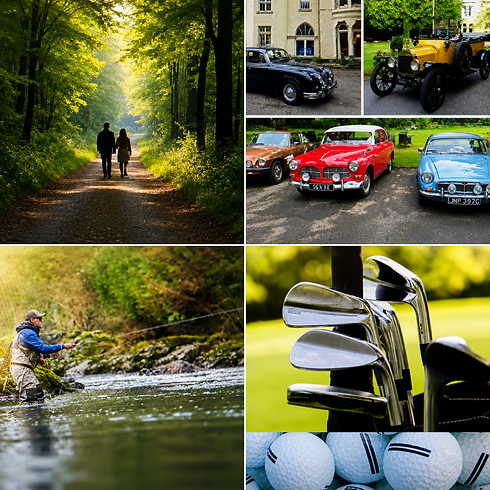
Discover some of South Wales' most exciting road routes right on our doorstep, from scenic drives through the breath-taking Brecon Beacons and the winding roads of the Black Mountains, to popular touring and cycling routes through the beautiful Usk Valley and Monmouthshire countryside. For anglers, the area is a true paradise with the renowned River Usk and nearby River Wye offering some of the UK's finest salmon and trout fishing opportunities.
Walkers are equally spoilt for choice, with an abundance of scenic trails and countryside walks nearby.
For golf enthusiasts there are a number of excellent courses nearby providing scenic fairways and challenges for all abilities.
Whether you're planning a group outing, car club tour, fishing break, walking break or golfing getaway, clubs are warmly invited to get in touch to discuss special group rates and tailored packages.
Brecon Mountain Railway
TRAVEL ON A VINTAGE TRAIN WITH BRECON MOUNTAIN RAILWAY
Steam through the Brecon Beacons (Bannau Brycheiniog) on a vintage narrow‑gauge railway, starting from their main station at Pant, just north of Merthyr Tydfil. Enjoy a scenic 9.5‑mile return journey that follows part of the historic Brecon & Merthyr Railway, first opened in the 19th century and closed in 1964.
Travel in comfort in their all‑weather observation carriages, hauled by beautifully restored steam locomotives. The route winds past Pontsticill, runs alongside the full length of the Taf Fechan Reservoir and climbs towards Torpantau, one of the highest railway summits in Britain.
Before or after your trip, relax at Pant Station in their Tearooms, browse the shop for gifts and souvenirs, or take a look into the engineering workshop where their locomotives and carriages are maintained.
The Polar Express is coming to Brecon Mountain Railway this Christmas


Tintern Abbey
Tintern Abbey is a national icon — still standing in roofless splendour on the banks of the River Wye nearly 500 years since its tragic fall from grace.
It was founded in 1131 by Cistercian monks, who were happy to make do with timber buildings at first. Abbot Henry, a reformed robber, was better known for his habit of crying at the altar than for his architectural ambitions.
A simple stone church and cloisters came later. But then, thanks to the patronage of wealthy Marcher lords, the white-robed monks began to think bigger.
In 1269 they began to build a new abbey church and didn’t stop until they’d created one of the masterpieces of British Gothic architecture. The great west front with its seven-lancet window and the soaring arches of the nave still take the breath away.
So grateful were the monks to their powerful patron Roger Bigod that they were still handing out alms on his behalf in 1535. But by then King Henry VIII’s English Reformation was well underway.
Only a year later Tintern surrendered in the first round of the dissolution of the monasteries — and the great abbey began slowly to turn into a majestic ruin.
Pen y Fan
Pen y Fan is the highest mountain in southern Britain. At 886 metres (2,907 feet), its flat-topped summit rises above everything between here and the Lake District — a Bronze Age burial ground, an SAS testing ground, and one of the most visited mountain summits in the UK. On a clear day, you can see Cadair Idris to the north, the Bristol Channel to the south, and the Black Mountains stretching east. On a bad day, you cannot see your own feet.
The mountain sits at the heart of Bannau Brycheiniog (Brecon Beacons) National Park and draws an estimated 350,000 visitors per year. The shortest route to the summit takes under two hours. The longest — the Horseshoe Ridge — summits four peaks in a single day. Between them are routes for every ability, from families with young children to endurance athletes training for military selection.
-
Height: 886 metres / 2,907 feet — highest peak in southern Britain.
-
Location: Bannau Brycheiniog (Brecon Beacons) National Park, South Wales.
-
Easiest route: The Motorway from Pont ar Daf — 4 miles circular, 2–2.5 hours. Families with children regularly complete this.
-
Best route: Cwm Llwch Horseshoe from Cwm Gwdi — 6 miles, 3–4 hours. Quieter, more scenic, ridge walking.
-
Most challenging: Horseshoe Ridge from Neuadd — 9.3 miles, 5–7 hours. Four summits.
-
Dog-friendly: Yes — on lead at all times (livestock grazing).
-
Free to climb: Yes — only car parking costs money.
-
Pronunciation: “pen uh van” (not “pen ee fan”).


Puzzlewood
Discover the magic of Puzzlewood
A unique and ancient woodland in the heart of the Forest of Dean, Puzzlewood is a rare temperate rainforest and a popular filming location, which has featured in Star Wars, Doctor Who and many more. It's famous for its strange rock formations, secret caves and ancient trees. This magical and otherworldly environment must have kept locals guessing for centuries as to how it came about – it’s surely how Puzzlewood got its name.
It's twisted trees and moss covered rocks, create an otherworldly woodland that is quite unlike any other. The mile and a half of paths take you up and down steps, through mossy gorges and over wooden bridges to scenic lookouts.
Fun for families
Puzzlewood is fun for all ages; with beautiful scenery to inspire all. Children can enjoy their educational Roman coin treasure hunt and their information boards will tell you more about Puzzlewood’s history, geology and film/TV connections.